Scientists have found more than 60 active proteins and enzymes in medicinal leech saliva.
These enzymes provide potent anticoagulant, anti-inflammatory, and analgesic effects. By working synergistically to inhibit clotting and enhance tissue perfusion, these substances have become essential tools in modern reconstructive surgery.
Natural chemicals stop blood from clotting, reduce swelling, and kill pain. Because they are so good at keeping blood flowing to injured areas, doctors frequently use them to help tissues heal after complex surgeries
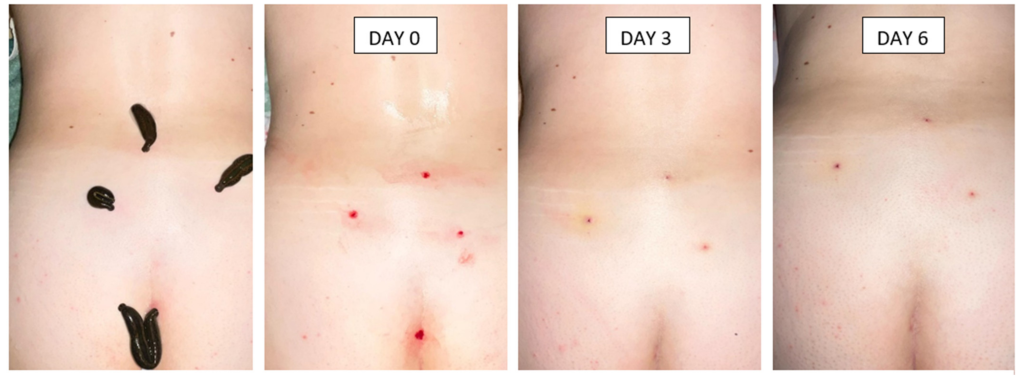
The image shows a sequence of 4 photos documenting the skin during and after a leech therapy session on the lower back / sacral area.
Medicinal leeches don’t just “drink blood.”

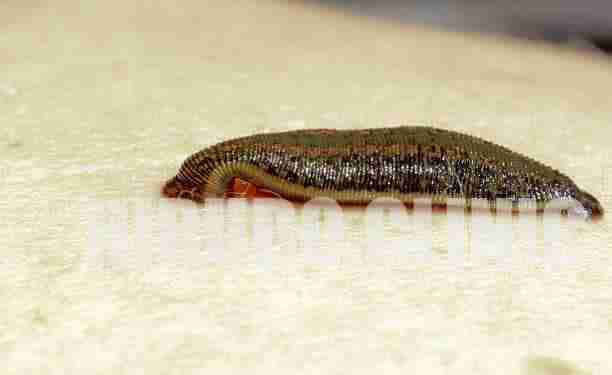
medicinal leech
Each medicinal leech carries about 37,000 salivary cells packed with natural anticoagulant & anti-inflammatory substances
During a session these cells are released into the tissues, improving micro-circulation and helping the body clear stagnated blood. The saliva contains natural compounds that act as anticoagulants, preventing blood from clotting, as well as anti-inflammatory substances that help reduce swelling and discomfort.
This microscope image shows the salivary gland area inside a medicinal leech. In panel A you see an unfed leech: the rounded purple-red structures marked by arrows are large, full salivary gland cells packed with proteins.micro-circulation improve.

In panel B you see the same region after the leech has fed on a human for about 30 minutes: the gland cells look much smaller and “emptier,” because they have released most of their contents. These glands store anticoagulant and anti-inflammatory substances, which are injected into the bite during leech therapy and help the blood stay fluid and
Healing compounds help thin the blood and improve circulation by releasing mild anaesthetics and easing any tension in the area being treated.
As the leeches do their work, they make the blood flow more freely and soften areas where the blood might be thick or stagnant. After a session, many people report that the treated area feels lighter, warmer, and more relaxed—almost as if the tension has been lifted.
Here’s a traditional‐inspired, evidence-based summary of the therapeutic uses of leech saliva (via what is often called “hirudotherapy”), along with its mechanisms of action and caveats.
What the saliva contains and how it works
Experts have identified many bioactive substances in the saliva of medicinal leeches. PMC+2PMC+2 Key mechanisms:
Anticoagulant & antithrombin effects:
One of the best known agents is Hirudin, which inhibits thrombin and thus keeps blood flowing rather than clotting.
Hirudin, the natural anticoagulant in leech saliva, blocks thrombin and prevents tiny clots from forming. As a result, blood in the treated area keeps flowing instead of stagnating. This improved microcirculation brings more oxygen and nutrients to fibroblasts, helps remove toxins and inflammatory debris, and creates healthier conditions for natural collagen renewal. Over time, this can support firmer skin, better tone, and a more youthful glow without fillers or surgery.
- Platelet aggregation / anti-platelet effects: Substances such as calin, saratin and apyrase inhibit platelets from sticking and forming clots. PMC+1
- Vasodilation & increased circulation: The saliva contains substances that relax local blood vessels, improving flow and reducing congestion. tgh.org+1
- Analgesic & anti-inflammatory effects: Some compounds reduce pain and inflammation, which aids healing and patient comfort. PMC+1
- Extracellular-matrix degradation & antimicrobial peptides: For tissue penetration and perhaps antimicrobial defence, enzymes such as hyaluronidase, collagenase, and new peptides from leech microbiome have been found. PMC+1
In short: leech saliva is far more than the “blood-draining” action; it actively modifies local circulation, coagulation and inflammation.
Where the therapy is used
From a traditional viewpoint, the applications are many, but modern medicine uses it in more specific contexts. Here are the main areas:
- Reconstructive / microsurgery: When a flap of tissue or a reattached digit has venous congestion (blood cannot get out), applying leeches helps relieve that congestion and save the tissue. tgh.org+1
- Painful musculoskeletal disorders: There is evidence for conditions such as chronic low back pain. For example, in a trial, leech therapy improved pain and function for low back pain patients. PMC
- Arthritis & joint conditions: Some studies show benefit in osteoarthritis (especially knee) via the analgesic/anti-inflammatory/flow-improving actions. Frontiers+1
- Vascular/venous disorders: Conditions like phlebitis or varicose veins may benefit from improved circulation and anti-clotting effects. PMC+1
What the studies tell us ABOUT leech saliva?
Your Attractive Heading

- A systematic review found that leech therapy can improve quality of life in several conditions including knee osteoarthritis, back pain, varicose veins etc. Frontiers
- In one controlled trial for chronic low back pain: after one session of leech therapy, pain scores improved significantly compared to exercise therapy at 4 and 8 weeks. PMC
- For microsurgery salvage (flaps, replantation), the therapy is well established and supported by guidelines. UHCW+1
Traditional outlook and how it fits
From a “how things have always been done” perspective:
Leech therapy has roots going back thousands of years (Ancient Egypt, medieval Europe) and was used broadly under humoral theory, as bloodletting and for many “imbalances”. Royal College of Surgeons
Modern use refines that tradition: rather than haemorrhagic bloodletting, it uses the leech’s saliva and its biologically active compounds to restore circulation, reduce stasis, and support healing.
If one values the continuity of tradition, this is a case where an old practice has been re-interpreted and re-applied with modern scientific understanding.
Important caveats & risks
- Infection risk: Because leeches carry gut bacteria (e.g., Aeromonas) they may infect the patient unless proper prophylaxis is given. biology.anu.edu.au+1
- Bleeding / prolonged oozing: Due to anticoagulant effects, after the leech detaches, bleeding may continue for hours. hey.nhs.uk+1
- Lack of large high-quality trials: For many indications beyond microsurgery the evidence is still limited; guidelines often regard it as complementary. Drugs.com+1
- Contraindications: Arterial insufficiency, risk of anaemia, immunosuppressed state, allergy to leeches’ components. Drugs.com
- Regulation and sourcing: Medical leeches must be bred under sterile, controlled conditions; not all leech therapy practices are equal. UHCW
Practical considerations if offering this therapy
- WE Use only medical-grade leeches from reputable suppliers, and maintain strict hygienic protocols.
- Explain to clients that while results can be impressive, it is not a “miracle for everything”: set realistic expectations.
- Monitor for bleeding and infection signs, ensure follow-up.
- Document the specific site, number of leeches used, duration of attachment, and patient response—good practice from the “time-honoured” viewpoint of careful case record.
detailed chart of salivary compounds → mechanism → clinical application
Therapeutic Compounds of Hirudo medicinalis Saliva
| Compound Class | Specific Compound | Mechanism of Action | Clinical Application |
|---|---|---|---|
| Anticoagulants | Hirudin | Direct and irreversible thrombin inhibitor; prevents fibrinogen from turning into fibrin. | Vascular Surgery: Prevents clots in reattached limbs and skin flaps. |
| Calin | Inhibits platelet adhesion to collagen; prevents early clot formation at the bite site. | Microsurgery: Maintains prolonged “passive bleeding” to relieve venous congestion. | |
| Factor Xa Inhibitor | Blocks Factor Xa, a key enzyme in the coagulation cascade. | Thrombosis Treatment: Used to manage deep vein thrombosis and pulmonary embolisms. | |
| Anti-Inflammatories | Eglins | Inhibits alpha-chymotrypsin and neutrophil elastase; reduces tissue damage. | Arthritis: Reduces swelling and joint inflammation in osteoarthritis. |
| Bdellins | Acts as a plasmin and trypsin inhibitor; modulates the inflammatory response. | Pain Management: Helps resolve chronic inflammation in localized injuries. | |
| Enzymes / Spreaders | Hyaluronidase | Degrades hyaluronic acid in the extracellular matrix, increasing tissue permeability. | Drug Delivery: Enhances the penetration of other salivary bioactives into deep tissues. |
| Destabilase | Hydrolyzes stabilized fibrin bonds; has both anticoagulant and antimicrobial effects. | Cardiovascular Health: Aids in dissolving pre-existing blood clots. | |
| Vasodilators | Histamine-like | Induces local vasodilation to increase blood flow to the treatment area. | Reconstructive Surgery: Boosts microcirculation in “congested” or blue-tinted skin grafts. |
| Analgesics | Kininases | Breaks down bradykinin, a primary mediator of pain. | Chronic Pain: Provides relief in conditions like migraines and knee pain. |