Apitherapy is a traditional natural therapy that uses honeybee-derived substances such as honey, propolis, royal jelly, bee pollen, and bee venom. These natural compounds are valued for their anti-inflammatory, antimicrobial, and immune-supporting properties. Today, apitherapy is gaining renewed interest as a complementary approach for people seeking natural support for pain, inflammation, circulation, skin health, and general wellbeing.
Bee venom therapy is a traditional method used for centuries across different cultures. It involves the careful, controlled application of bee venom to specific points on the body, often guided by practical knowledge from beekeeping and natural medicine.Bee venom contains biologically active compounds that may influence inflammatory and immune pathways, including potential immunomodulatory effects. At present, this therapy is offered in Crete, in collaboration with experienced beekeepers and under appropriate conditions.
Bee Venom Therapy (Apitherapy)
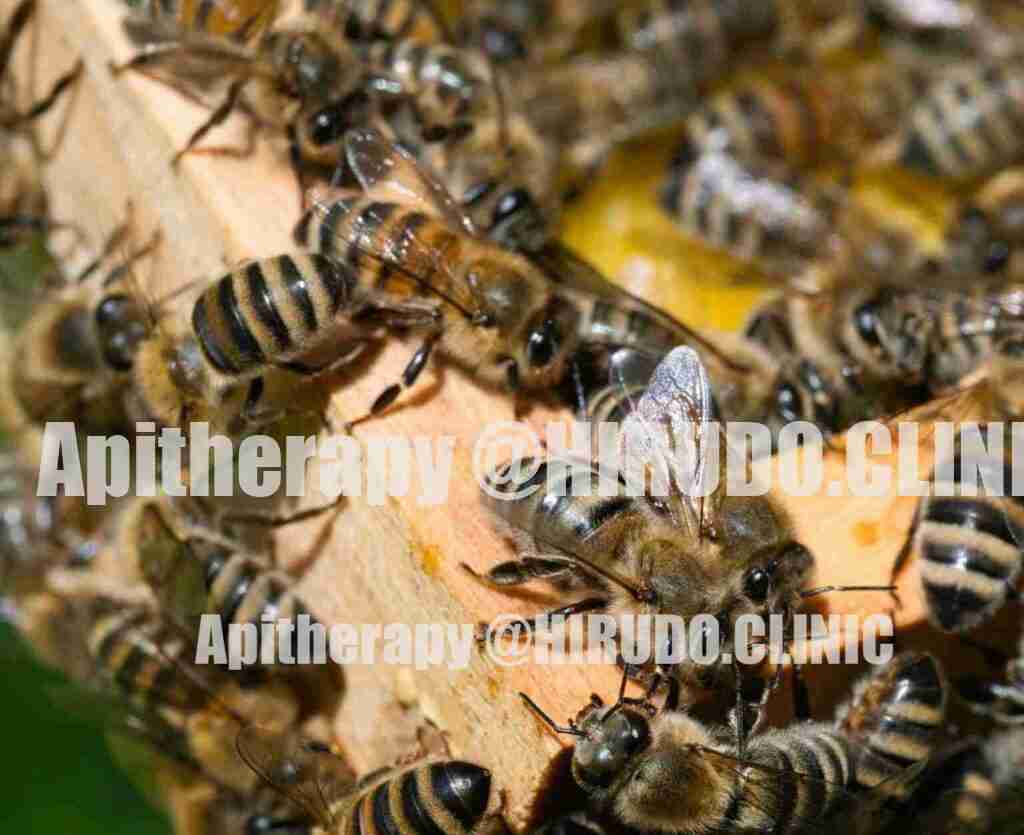
At Hirudo Clinic, we approach this method with care, respect, and clear boundaries.read SAFETY tips
Apitherapy utilizes honeybee-derived substances (honey, propolis, royal jelly, venom, pollen) to promote healing via intense anti-inflammatory, antimicrobial, and immunological modulation, often outperforming traditional therapies in chronic disease management.
The Hive Pharmacy: Biological Mechanisms of Bee Products
Apitherapy, the medicinal use of honeybee products, is witnessing a resurgence in integrative medicine. As researchers, we are moving beyond traditional uses to understand the underlying bio-molecular mechanisms that make these products potent, natural therapeutic agents.  Journal of Apitherapy +2
1. Honey: Molecular Wound Healing & Metabolic Modulation
- Mechanism: Honey, particularly high-grade variations like Manuka, exhibits potent antibacterial, antioxidant, and anti-inflammatory properties. Its low pH and hydrogen peroxide content (via glucose oxidase) create an hostile environment for bacteria, aiding wound sterilization.
- Action: It promotes angiogenesis and granulation, accelerating tissue repair.
Akademicka Platforma Czasopism +3
2. Propolis: The Anti-inflammatory Shield
The “Chemical Weapon” of the Hive
Often called “bee glue,” propolis is a complex resinous mixture used by bees for hive defense and by humans for its potent Anticancer and Anti-inflammatory Properties.
- Inflammatory Pathway Inhibition: Bioactive flavonoids and caffeic acid in propolis inhibit the lipoxygenase and arachidonic acid pathways, effectively blocking the production of pro-inflammatory cytokines like IL-6 and TNF-\(\alpha \).
- Metabolic Regulation: Propolis inhibits the interaction between advanced glycation end products (AGEs) and their receptors (RAGEs), showing promise in managing metabolic syndromes and type 2 diabetes.
- Synergistic Antimicrobial Action: It interferes with bacterial cell wall integrity and protein synthesis, often enhancing the efficacy of standard antibiotics.
- Mechanism: Rich in phenolic acids and flavonoids, propolis acts as a potent anti-inflammatory agent. It acts by inhibiting the production of inflammatory mediators like cytokines and prostaglandin
(PGE2).
- Action: It exhibits antibacterial, antiviral, and antifungal properties, making it an excellent natural antimicrobial agent.
Akademicka Platforma Czasopism +2
3. Bee Venom (Apitoxin): Neuromodulation and Pain Management
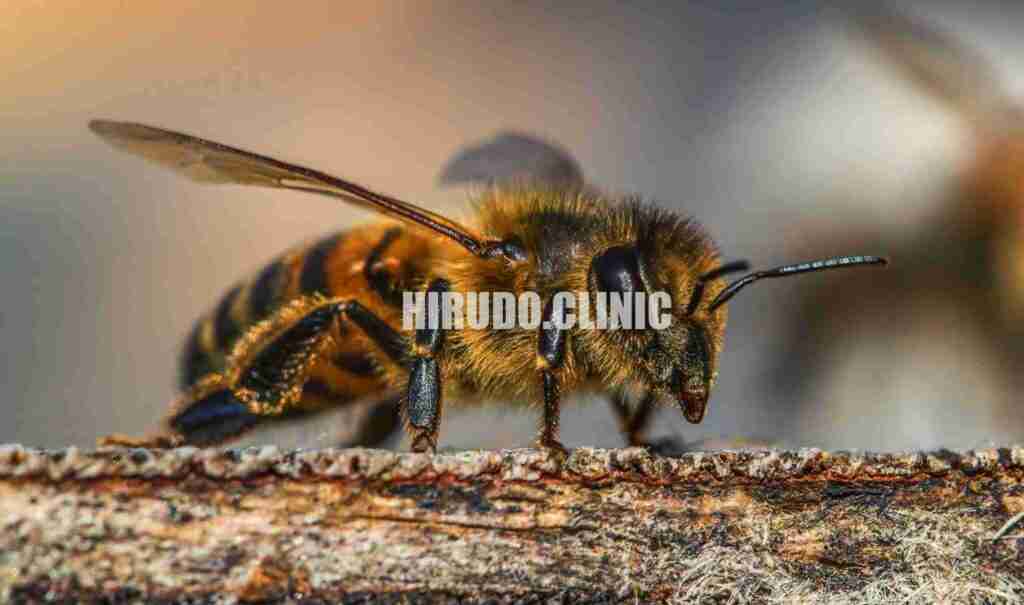
- Mechanism: Bee venom contains active peptides (mellitin, apamin) that display strong anti-inflammatory and antinociceptive properties, particularly effective in chronic pain management like arthritis.
- Action: It acts on the immune system, often modulating auto-immune responses, and is being studied for neuroprotective roles in Parkinson’s and Alzheimer’s diseases.
National Institutes of Health (.gov) +4
4. Royal Jelly and Pollen: Immunomodulation and Antioxidant Defense
- Mechanism: Royal jelly contains 10-hydroxy-2-decenoic acid (10-HDA), which contributes to its unique immuno-modulating, antimicrobial, and anti-tumor effects.
- Action: These products enhance collagen production, support liver health, and act as potent antioxidants to neutralize free radicals.
Akademicka Platforma Czasopism +1
Future Directions in Apitherapy
Innovative approaches, such as the development of nanotechnology-based delivery systems (nanoparticles, nanofibers), are being explored to enhance the bioavailability of these bioactive components.
Apitherapy involves the careful, controlled application of bee venom to specific points on the body
What Is Bee Venom Therapy
Bee venom contains natural compounds such as melittin and enzymes.
The method is typically carried out with live bees or controlled venom application, depending on the setting.
apitherapy, bee venom therapy, bee sting therapy, alternative medicine, natural healing, holistic therapy, traditional medicine, bee venom, apitherapist, immune response, circulation support, integrative therapy, hirudotherapy, leech therapy, hiruda clinic
Before considering bee venom therapy, clients should be aware that bee venom can trigger local reactions, allergic reactions, and in some cases severe anaphylaxis. A prior mild reaction does not fully rule out a more serious future reaction. Anyone with a history of systemic sting reactions, asthma, cardiovascular disease, mast cell disorders, or other allergy risk factors should seek medical assessment first.
Bee Venom Therapy
At Hirudo Clinic, our main focus is hirudotherapy (leech therapy). As part of the broader tradition of natural biological therapies, we also provide information about bee venom therapy (apitherapy) as a related complementary method.
Bee venom therapy uses the biologically active compounds. These compounds, including melittin and phospholipase A2 interact with immune and inflammatory pathways.
At the same time, bee venom can also cause local inflammation, allergic reactions, and in some people severe systemic reactions, including anaphylaxis.
Because of this, anyone considering bee venom therapy should understand the risks before proceeding. People with a history of bee sting allergy, systemic allergic reactions, asthma, cardiovascular disease, mast cell disorders, or other significant allergy risk factors should seek medical assessment first. It is also important to know the warning signs of a serious reaction, including swelling of the throat or tongue, difficulty breathing, wheezing, dizziness, fainting, or collapse.
At Hirudo Clinic, bee venom therapy is not presented as a casual wellness procedure. It should only be considered with full awareness of the risks, careful screening, and an appropriate emergency plan in place. Our primary and established service remains leech therapy, while bee venom therapy is approached as a related traditional method that requires extra caution and individual suitability assessment.
compounds like melittin can reduce certain inflammatory signals in the body
- May inhibit pro-inflammatory cytokines
- May affect pathways like NF-κB (involved in inflammation)
- Observed in conditions like arthritis (mainly in animal studies)
How bee venom may influence T-cells
The immune system has different “modes”:
Shifting immune balance (Th1 / Th2 / Treg)
- Th1 → more inflammatory (defence)
- Th2 → allergy-related
- Treg (regulatory T-cells) → calm and control the immune response
Studies suggest bee venom can:
- Increase regulatory T-cells (Treg) → helps reduce overactive immune responses
- Shift balance away from excessive inflammation or allergy
👉 This is why venom is used in allergy desensitization therapy (very controlled medical setting)
Reducing inflammatory signaling
Bee venom compounds like melittin Blocking the Alarm for inflammation.
Melittin seems to block NF-κB, which is like the body’s main alarm system for inflammation. When this system is blocked, the body stops sending out as many “emergency” signals.
- Suppress signaling pathways such as NF-κB
- Reduce production of inflammatory cytokines (e.g. TNF-α, IL-6)
👉 Result: less immune-driven inflammation (observed mostly in lab/animal studies)
Dose-dependent effect
This is critical:
- Low, controlled exposure → may calm or regulate immune response
- Higher or uncontrolled exposure → can trigger strong inflammation or allergy
👉 Same substance, very different outcomes
Direct interaction with immune cells
Bee venom components
- Interact with dendritic cells (which “teach” T-cells how to respond)
- Influence how T-cells get activated or suppressed
apitherapy, bee venom therapy, , alternative medicine, natural healing, holistic therapy, traditional medicine, bee venom, apitherapist, immune response, circulation support, integrative therapy, hirudotherapy, leech therapy, hiruda clinic
bee sting therapy
Can you reuse the bee?
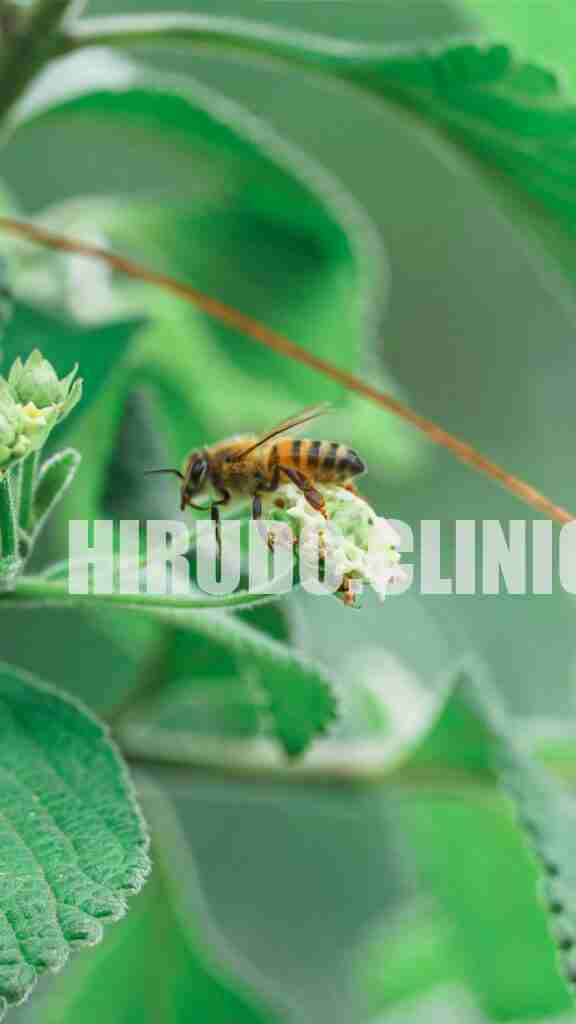
Does the bee stinger keep releasing venom?
Yes. After a bee sting, the detached venom sac can continue to pulse and release venom for several minutes if the stinger is not removed.
For this reason, the stinger should be removed as soon as possible by gently scraping it away from the skin. Avoid squeezing the venom sac, as this may push more venom into the skin.
Possible signs of an allergic reaction
Seek urgent medical help if any symptoms appear away from the sting site, especially:
- Hives or itching on other parts of the body
- Dizziness or nausea shortly after the sting
- Swelling of the throat, face, lips or tongue
- Shortness of breath, wheezing or difficulty breathing
Important safety note
Serious allergic reactions, including anaphylaxis, can be unpredictable and life-threatening. Anyone planning repeated bee venom exposure should consult an allergist first and discuss whether allergy testing and an epinephrine auto-injector, such as an EpiPen, are appropriate.
apitherapy, bee venom therapy, honey healing, propolis benefits, royal jelly therapy, natural anti-inflammatory treatment, bee therapy, apitherapy for pain, apitherapy clinic, natural wellness therapy