Most people who end up reading about medicinal leeches and headaches have already tried the obvious things. Painkillers that work for a while and then stop. A change of pillow. Less screen time, more water, an eye test. Leech therapy for headaches is one of several complementary approaches people may explore, but it is not a substitute for medical diagnosis or standard treatment.
This page sets out what medicinal leech therapy involves for headache and migraine symptoms, where leeches are usually placed, and — just as importantly — what the published research does and does not show. We have tried to be straightforward about the limits of the evidence, because anyone weighing up a treatment deserves that.
Headache or migraine? The distinction matters
The two words get used interchangeably, but they describe different things. A tension-type headache tends to feel like steady pressure or tightness, often across the forehead or around the back of the head and neck. It builds gradually, and many people carry on working through it.
Migraine is a neurological condition, not simply a severe headache. Attacks are typically one-sided and throbbing, and frequently come with nausea, sensitivity to light or sound, and sometimes visual disturbance beforehand. An older explanation held that migraine was essentially a matter of blood vessels widening and narrowing. Current understanding is more complex — the trigeminal nerve pathways and changes in brain excitability are now considered central, with vascular changes a consequence rather than the whole cause.
That distinction shapes expectations. Someone with neck-related tension headaches and someone with established migraine are unlikely to respond to the same approach, and neither should be treated without knowing which they have.
What medicinal leech therapy actually involves
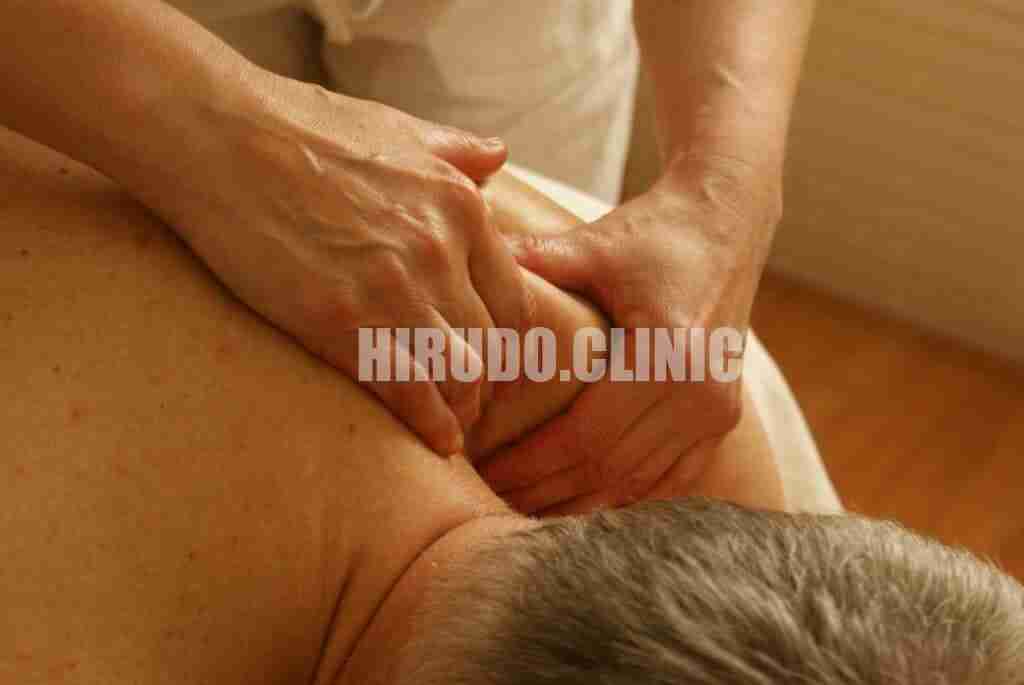
Medicinal leech therapy — hirudotherapy — uses Hirudo medicinalis или Hirudo verbana, farmed for clinical use and applied once only, then disposed of. A session begins with the skin being cleaned, after which one to several leeches are placed on selected points. Attachment is usually felt as a brief scratch or nip; the leech’s saliva contains a mild anaesthetic component, so the sensation generally settles quickly.
Each leech feeds for roughly twenty to forty-five minutes and detaches by itself. The small wounds then ooze for several hours — occasionally up to a day — because of the anticoagulants in the saliva. This is expected rather than a complication, though it does mean dressings and a little planning around the rest of your day.
Why practitioners consider it for headache symptoms
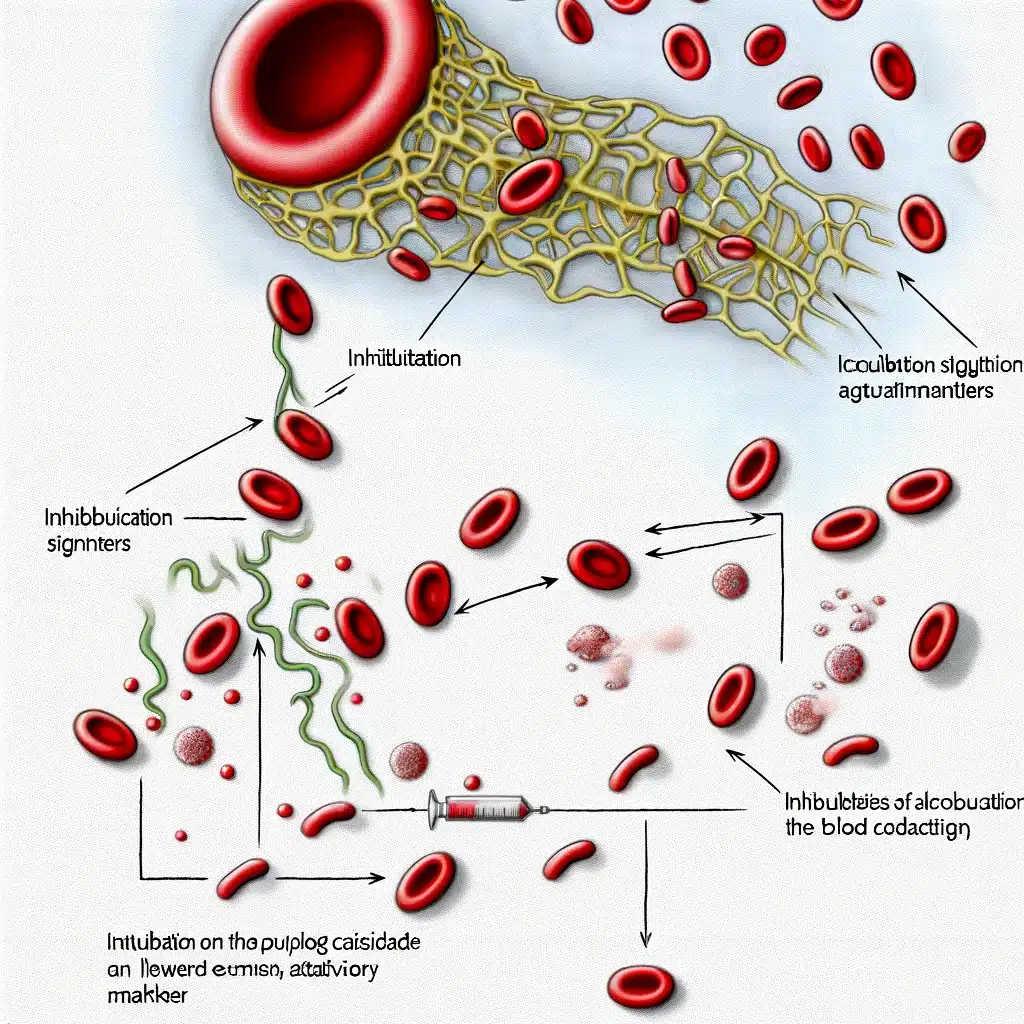
Leech saliva is a genuinely interesting substance. It contains hirudin, a potent natural anticoagulant, alongside a range of other compounds with anti-inflammatory, vasodilatory and local anaesthetic properties. These are well described in the laboratory literature.
What is far less settled is the step from those properties to relief of a particular person’s headaches. The reasoning practitioners use — that improved local circulation and reduced local inflammation may ease pain arising from muscular tension or vascular sensitivity — is plausible and consistent with what the compounds do. It has not been demonstrated in the kind of trial that would let anyone state it as fact. It should be read as a working rationale, not as an established mechanism.
Where leeches may be placed
Placement is where most of the practical questions arise, and it is the part of traditional practice that has been handed down most consistently. Five regions are commonly used for headache work. The point names below come from Traditional Chinese Medicine, where each carries a traditional indication; those indications describe a historical framework of practice, not a physiological mechanism.
Placement must be selected individually by a trained practitioner following an assessment. Medicinal leeches should not be applied without professional supervision.
Behind the ear — post-auricular leech therapy
The hollow behind the earlobe, between the jaw and the mastoid process, corresponds to the traditional point Yifeng (SJ-17); slightly higher and further back sits Wangu (GB-12). Leech therapy behind the ear is the placement with the most published attention for migraine specifically, and it is the approach used in the small study described further down this page. We have written separately about treating the post-auricular area if you want more detail on that region.
The base of the skull
Roughly two to three centimetres above the hairline, in the hollows either side of the neck muscles where they meet the skull — the traditional point Fengchi (GB-20). This region is often chosen where headaches seem to travel up from a tight neck, which covers a great many desk-bound patients.
The temples
Taiyang (EX-HN5) lies in the slight depression roughly a finger’s width back from the midpoint between the outer eyebrow and the corner of the eye. Practitioners commonly use this area when pain is throbbing and one-sided.
The forehead and brow
Shenting (DU-24) sits on the midline just above the hairline, and Yintang (EX-HN3) between the inner ends of the eyebrows. The latter has a long traditional association with frontal head pain — we cover it in more depth in our article on the Yintang point in leech therapy.
The neck and upper spine
Dazhui (DU-14) sits below the prominent vertebra at the base of the neck, with Fengfu (DU-16) higher, beneath the occipital ridge. These are typically chosen where posture and muscular tension appear to be driving the pattern.
None of this is a template. Which points are appropriate, how many leeches are used and whether treatment is suitable at all depend on your headache pattern, your general health and your medication. That assessment happens in person, before any leech is applied.
What the clinical evidence shows
Two published studies address leech therapy and migraine directly, and a Russian-language clinical report describes a larger group treated for facial and head pain. None is large or rigorous enough to settle the question.
In 2015, Bakhshi and colleagues published a pilot study of 26 patients with migraine, comparing a single session of leech therapy against standard drug treatment with propranolol and amitriptyline, followed up over three months. Both groups showed significant reductions in headache severity and duration, with no significant difference between them at three months. The authors present this as a pilot investigation and note that the small sample limits how far the finding can be generalised.
In 2019, Ansari and colleagues published a case series of seven patients with chronic migraine who had not responded to conventional oral treatment. Following post-auricular leech therapy they recorded fewer headache and migraine days and reduced painkiller use, with no adverse effects reported. The authors themselves call for further trials before conclusions are drawn.
Findings reported in Russian hirudotherapy literature
A Russian-language clinical report by V. A. Savinov and M. L. Dmitriev offers a third and rather different kind of account. The authors describe treating 132 patients who had pain across several areas of the face and head, in some cases for as little as six months and in others for as long as twenty years. They recorded signs that they interpreted as inflammation of the autonomic nerve ganglia.
Most of those patients received between five and ten sessions of complex hirudotherapy, usually once or twice a week, with leech placement selected individually according to where the pain was felt. The detail that matters most for interpretation is that medicinal leeches formed only one part of a broader programme, which also included manual therapy, vacuum therapy and treatment of accompanying health conditions.
Over follow-up periods ranging from six months to two years, the authors reported that pain disappeared completely in 70% of patients and lessened in the remaining 30%. They also observed that many patients experienced some reduction in pain during the first session.
These figures should be read with care. The report describes no randomisation, no control group, no blinding, no standardised outcome assessment and no systematic recording of adverse events. Because several treatments were delivered together, it cannot show that leech therapy alone produced the improvements described. It is best understood as an account of Russian clinical experience that may support further research, rather than as proof that the treatment is effective.
What these studies do not establish
Twenty-six patients and seven patients are very small numbers, and the larger Russian series was uncontrolled. A case series has no control group at all, so improvement cannot be separated from the natural fluctuation of a condition that varies week to week anyway, or from the placebo effect — which is known to be substantial in headache research. Neither study was large, blinded or replicated.
The honest summary is that these findings are preliminary and encouraging enough to justify further research, and nothing more. They do not establish that leech therapy is effective for headache or migraine. We cannot tell you it will work for you, and you should be cautious of anyone who does. Leech therapy is not a cure, and it must not replace diagnosis or treatment your doctor has recommended.
What a consultation at Hirudo Clinic involves
An initial consultation is a conversation before it is a treatment. We go through your headache history — how often, how long, what it feels like, what seems to set it off and what you have already tried. We ask about your medical history and, in particular, about any medication you take, since anticoagulants and antiplatelet drugs matter a great deal here.
From that we can say whether leech therapy is reasonable to consider, which placements would make sense, and what a realistic course might look like. Sometimes the answer is that it is not appropriate, or that you should see your GP first. We would rather say so at the outset. If you are still deciding whether the treatment suits you generally, our overview of who can benefit from leech therapy is a useful starting point.
Safety, contraindications and aftercare
Leech therapy is not suitable for everyone. It is generally avoided in people with anaemia or clotting disorders, those taking anticoagulant or antiplatelet medication, during pregnancy, in significant immune compromise, and in anyone with a known allergy to leech proteins.
The common after-effects are prolonged oozing from the bite sites, bruising, itching as the small wounds heal, and occasionally mild tiredness on the day. Infection is uncommon but possible, which is why sterile technique, single-use leeches and proper aftercare are not optional details.
Afterwards, leave the dressings in place as instructed, avoid scratching, and keep alcohol and strenuous exercise aside for the rest of the day. Contact us if bleeding has not settled within about twenty-four hours, or if a site becomes hot, swollen or increasingly painful over the following days.
When a headache needs a doctor, not a therapist
Some headaches are a signal of something that needs urgent assessment. Following NHS guidance, call 999 or go to A&E if a headache came on suddenly and is extremely painful, or comes with a seizure, numbness or weakness in the face or body, loss of vision, difficulty with speech, balance or memory, drowsiness or confusion, a rash that does not fade under pressure, or a high temperature with a stiff neck and dislike of bright light. The same applies after a recent head injury.
Contact NHS 111 or ask for an urgent GP appointment if a headache comes with vision or eye problems, is brought on or worsened by coughing, sneezing, bending or exercise, or is accompanied by vomiting, jaw pain when eating or tenderness of the scalp. See your GP in the ordinary way if headaches are frequent, worsening, lasting longer than usual, or not improving with self-treatment.
Common questions
Can leech therapy help with headaches?
Some people report that it helps, and there is a long tradition of using it this way. The published research is limited to a small number of studies, so it cannot be said to be proven. Whether it is worth considering in your case depends on the type of headache you have, which is what an assessment is for.
Can leech therapy help with migraine?
The two studies described above both looked at migraine and both reported improvement. Between them they involved 33 patients in total, without the scale or design needed to establish effectiveness. Leeches for migraine remain an option some people choose to explore alongside — not instead of — medical care.
Where are leeches placed for migraine?
Most often behind the ears, at the temples, at the base of the skull or along the upper neck, depending on where the pain sits and what seems to provoke it. The specific choice is made at consultation rather than from a standard chart.
Why may leeches be placed behind the ears?
It is the region with the most direct research attention for migraine, and in traditional practice it corresponds to Yifeng (SJ-17) and Wangu (GB-12), both long associated with head pain. The area is also convenient to dress and easy to keep clean afterwards.
Is leech therapy safe for someone with recurring headaches?
Recurring headaches do not themselves rule it out, but the reason for them matters, and so does your wider health and medication. Anticoagulant or antiplatelet medication, clotting disorders, anaemia and pregnancy are among the reasons treatment would not go ahead. Recurring headaches that are new, worsening or unexplained should be assessed by a doctor first.
What is post-auricular leech therapy?
Simply the application of medicinal leeches to the area behind the ear. It is the placement used in the 2019 case series, and the one most often described in connection with migraine.
Speak to us before you decide
If you are weighing up leech therapy for headaches or migraine, the sensible next step is a conversation rather than a booking. We will look at your headache pattern, your history and your medication, and give you a straight answer about whether treatment is appropriate — including when it is not.
Hirudotherapy in London is available at our clinic and, for some patients, as a mobile visit. Persistent, severe or changing headaches should be assessed by your GP first; we are glad to work alongside that rather than in place of it.
Medical information notice
This page is provided for general information and does not constitute medical advice, diagnosis or treatment. Medicinal leech therapy is a complementary therapy. It is not a cure for headache or migraine, is not a substitute for assessment by a qualified medical practitioner, and should not replace medication or treatment your doctor has recommended. Always consult your GP about new, persistent or worsening headaches.
Ссылки
- Bakhshi M, Jalalian B, Valian M, et al. Can Leech Therapy Be Used as an Alternative Treatment for Controlling Migraine Headache? Acta Facultatis Medicae Naissensis. 2015;32(3):189–197. DOI: 10.1515/afmnai-2015-0019. Pilot study, 26 participants.
- Ansari S, Nil F, Jabeen A, Sultana A, Khan QA. Post-auricular leech therapy reduced headache & migraine days in chronic migraine. Journal of Drug Delivery and Therapeutics. 2019;9(1-s):75–80. Case series, 7 patients.
- Savinov VA, Dmitriev ML. Комплексная гирудотерапия лицевых и головных болей [Complex Hirudotherapy of Facial and Head Pain]. Moscow Alliance of Hirudotherapists. Russian-language clinical report.
- NHS. Migraine.
- NHS. Headaches.