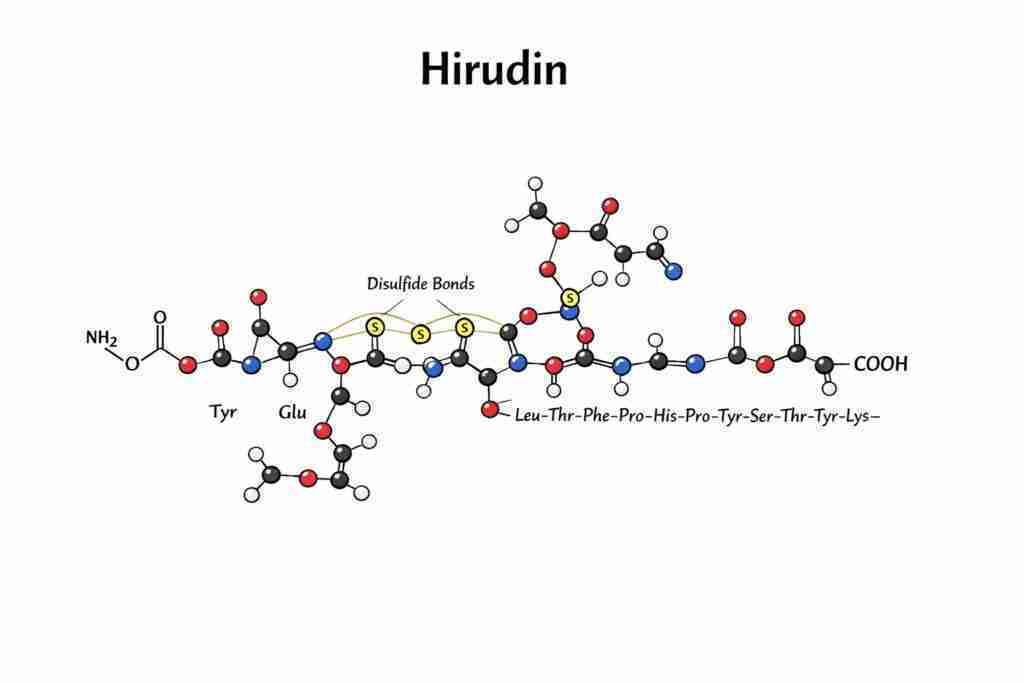
The гирудин molecule is a naturally occurring peptide. It is the main active ingredient found in the saliva of leeches particularly the Hirudo medicinalis species. Hirudin is renowned for its anticoagulant properties, primarily working by inhibiting thrombin, a key enzyme involved in blood clotting.
chemical structure of hirudin
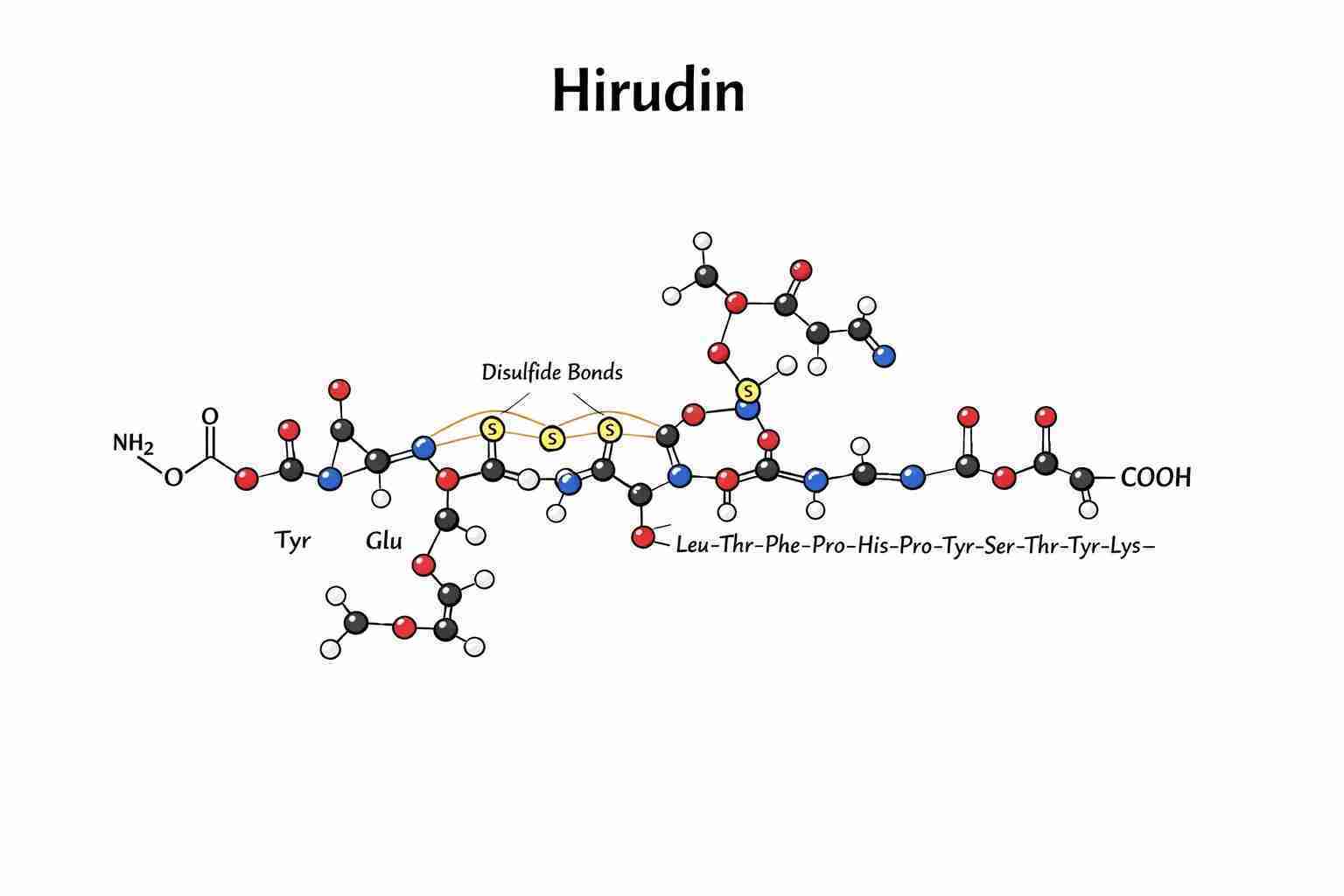
The chemical structure of hirudin is a peptide chain consisting of about 65 amino acids. It has a relatively complex structure with multiple disulfide bonds that contribute to its stability and activity.
Here’s a simplified breakdown of its structure:
- Amino acid sequence: Hirudin’s sequence contains specific amino acids that are involved in its anticoagulant action. It binds to thrombin and prevents it from converting fibrinogen to fibrin, which is essential for blood clot formation.
- Disulfide bonds: Hirudin has several cysteine residues that form disulfide bridges, which are crucial for its 3D conformation, helping it maintain its functional structure.
- Molecular weight: The molecular weight of hirudin is approximately 7,000 Daltons, depending on its specific isoform.
The chemical structure of hirudin is a peptide chain consisting of about 65 amino acids. It has a relatively complex structure with multiple disulfide bonds that contribute to its stability and activity.